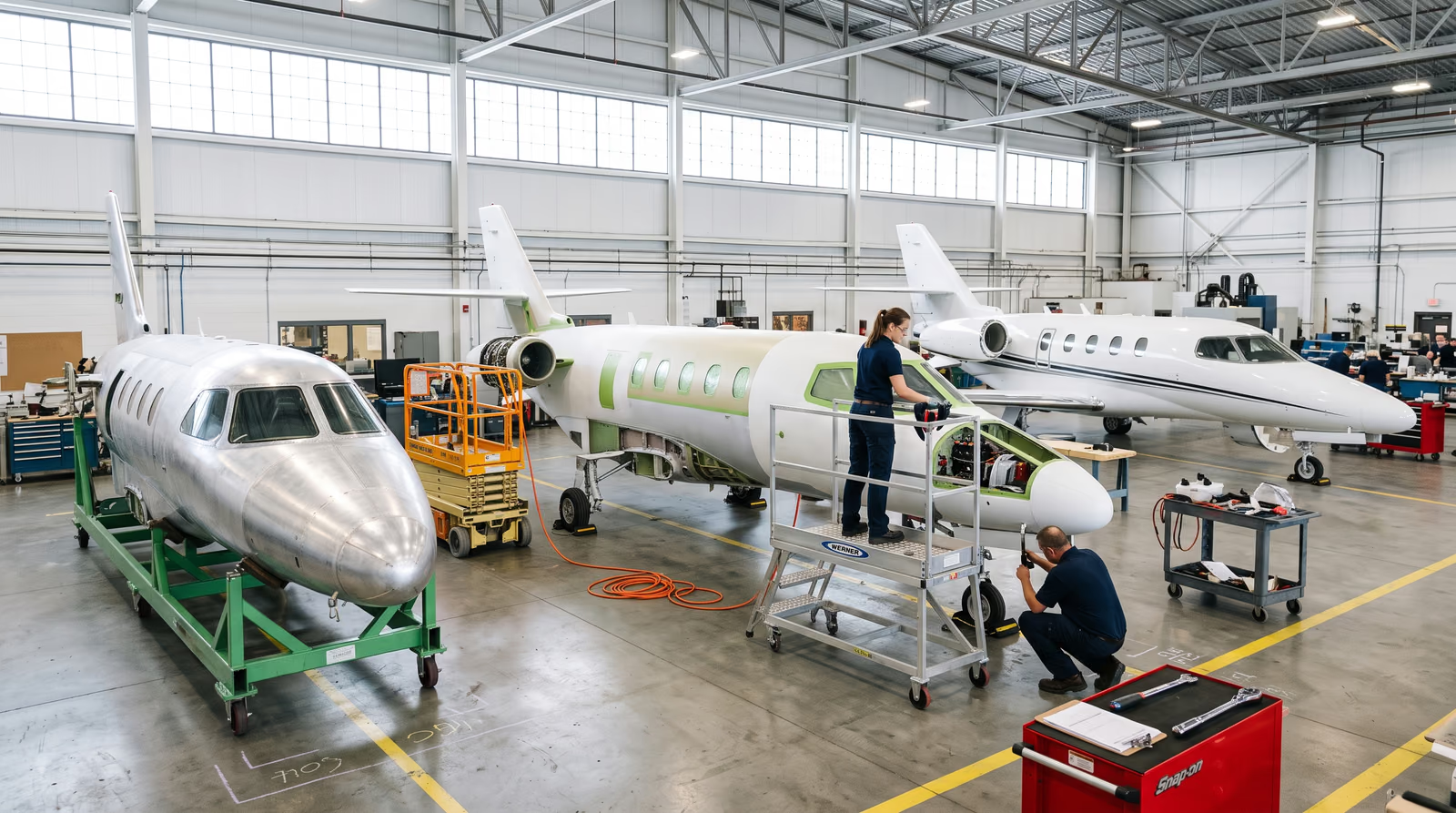
Honda Aircraft Company has put its own equity into a fractional ownership programme for the first time. Arulean Air, a Honda Aircraft subsidiary, has taken a minority investment position in the Las Vegas operator Thrive Aviation and will acquire the aircraft the programme flies. Both companies announced the arrangement on 2 September 2026, and Corporate Jet Investor and ch-aviation reported the details the same day.
The programme launches with two types. The HondaJet HA-420 covers the light category, configured for up to five passengers and aimed at regional missions. The Bombardier Challenger 3500 covers the super-midsize end, with a cabin laid out for up to nine passengers and the legs for longer trips. Thrive has already taken delivery of the first two aircraft, one of each type, and expects to add roughly four to six HA-420s and two to four Challenger 3500s a year as the programme scales. Initial operations will concentrate on the western United States.
The division of labour is the part worth reading twice. Thrive operates and manages the programme, holds the client relationships and runs the flight operations. Arulean Air buys the aircraft. The manufacturer's subsidiary carries the fleet, and the operator flies it.
What the announcement does not say
No share price. No hourly rate. No occupied hour minimum. No figure on the size of Arulean's stake in Thrive. For a fractional programme those are the numbers that decide whether a buyer is interested, and not one of them was disclosed. Corporate Jet Investor reports that fuller details are expected at NBAA-BACE in Las Vegas from 20 to 22 October. This is a structural announcement made seven weeks ahead of the show, not a product launch with a price list attached.
Curtis Edenfield, Thrive's co-founder and chief executive, framed it as infrastructure rather than a product, telling ch-aviation the company is "building another major piece of the Thrive platform and something we expect to scale for a long time."
One Programme, a Third of the Line
HondaJet HA-420 deliveries against the aircraft the Arulean Air fractional programme expects to absorb each year.
The fractional programme expects to take four to six HA-420s a year. That is roughly a fifth of 2026 guidance at its upper end, and close to half of what the type actually shipped in 2024. GAMA logged four HA-420 shipments worth $28.68 million in the first quarter of 2025, about $7.2 million an aircraft.
Sources: delivery figures for 2024 and guidance for 2025 and 2026 from Honda Aircraft chief operating officer Amod Kelkar, speaking to Aviation Week at EAA AirVenture 2025. Shipment and billing figures from GAMA. Programme intake from Thrive Aviation and Arulean Air announcements of 2 September 2026, as reported by Corporate Jet Investor and ch-aviation. Bar widths are indexed to the top of 2026 guidance.
Why the ownership structure changed
Honda has backed a HondaJet fractional programme before, and that one ended badly. In May 2023 the manufacturer signed a fleet purchase agreement with Volato covering 23 HondaJet HA-420s at an aggregate price of $161.6 million, with deliveries running from fiscal 2023 through fiscal 2025. Honda Aircraft terminated that agreement effective 10 September 2024 and retained the deposits Volato had paid, according to Private Jet Card Comparisons. Volato had by then already moved its fleet operations to flyExclusive, which said on its third quarter earnings call that 178 of Volato's 265 jet card customers had transferred across. A lawsuit filed on 28 January 2025 alleged that plaintiffs had each paid deposits and subsequent instalments of more than $900,000 for shares in Volato's HondaJet fractional programme.
What failed there was not the aeroplane. It was the operator's balance sheet: shares sold against aircraft not yet delivered, with the fleet financed largely by customer money. The Arulean structure inverts that. When the manufacturer's own subsidiary holds the aircraft, the fleet no longer depends on the operator's ability to raise capital against undelivered airframes, and a share buyer's exposure to the operator narrows towards the operating company rather than the asset itself. That is a materially different risk to underwrite, and it is the single most important thing about this announcement.
The scale of the commitment
Four to six HondaJets a year is a large slice of a small production run. Honda delivered 11 HondaJet Elite IIs in 2024, and chief operating officer Amod Kelkar told Aviation Week at EAA AirVenture 2025 that the company expected 14 to 15 deliveries in 2025 and 26 to 30 in 2026. Against that guidance, a programme absorbing four to six aircraft a year takes between a fifth and a third of planned output, and close to half of what the type shipped in 2024. GAMA recorded four HA-420 shipments worth $28.68 million in the first quarter of 2025, roughly $7.2 million an aircraft.
A manufacturer funding the buyer of a meaningful share of its own output is doing more than marketing. It is underwriting demand for the type through a production ramp, and Honda is in the middle of one. The HondaJet Echelon, the company's larger second aircraft, arrives into a line that has to roughly double HA-420 volume first. A committed fractional offtake makes that ramp considerably easier to plan against.
The wider market is supportive. GAMA reported 383 business jet shipments in the first half of 2026, up 8.2 percent year on year.
What light jet buyers should take from it
Volato's collapse removed the only fractional route into a HondaJet, and nothing replaced it for two years. This does, with a stronger sponsor behind the fleet. Thrive was founded in 2018, is based at Las Vegas Henderson, holds 23 jets on its Part 135 certificate and operates more than 30 aircraft in total. Corporate Jet Investor ranks it among the ten largest private jet operators in the world. It already sells on-demand charter, aircraft management, jet card memberships and maintenance, so the programme sits on an existing operating base.
None of that answers the question a buyer actually has, which is what a share costs and what it costs to fly. Anyone weighing this against the alternatives should start from the structures rather than the brand, and our comparison of fractional shares, jet cards and charter sets out where each one stops making sense. When pricing lands in October, five questions decide it: the size of the smallest share on offer, the occupied hourly rate, the monthly management fee, the contract term, and the exit terms, meaning who sets the remarketing price and what the buyout formula is at the end.
That last one carries more weight than it normally would. A programme whose fleet is owned by the aircraft manufacturer has an obvious interest in how residual values are set. Whether that works for or against share owners depends entirely on the wording, and the wording is not public yet.