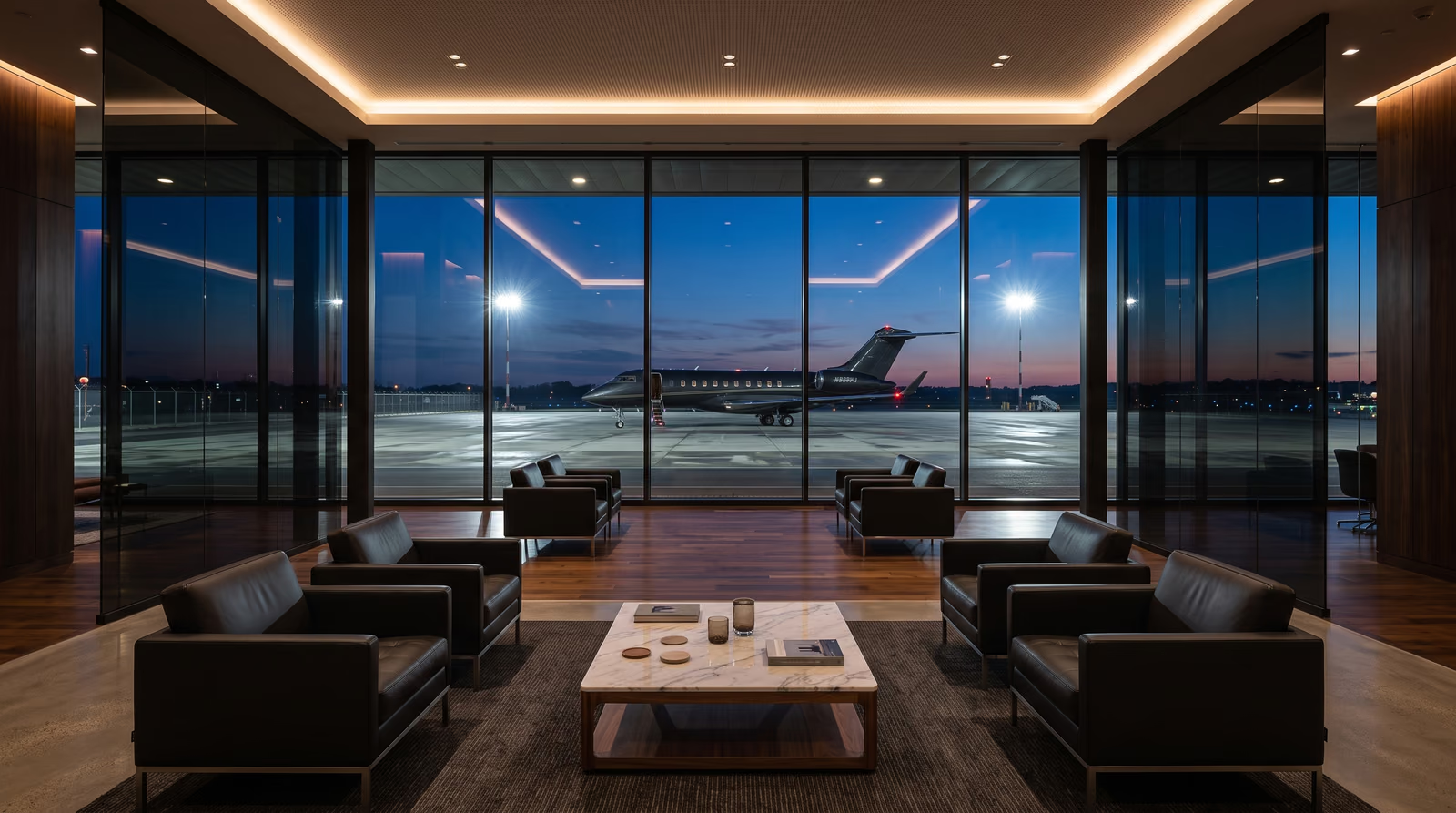
Five UAE airports handle private aviation, and they are not interchangeable. Al Maktoum International in Dubai and Al Bateen Executive in Abu Dhabi are the two purpose-built centres of gravity. Dubai International still takes business jets but is steadily pushing them elsewhere. Sharjah has just become a serious option. Zayed International in Abu Dhabi handles private traffic alongside a very busy commercial operation.
Which one you use changes your ground time, your customs experience, your handling bill and how far you then have to drive. Here is what each is actually for.
The Options at a Glance
| Airport | Code | Best for | Character |
|---|---|---|---|
| Al Maktoum International, Dubai | DWC | Business jets of every size, VIP airliners | Purpose-built bizav hub, 24/7, uncongested |
| Al Bateen Executive, Abu Dhabi | AZI | Anyone going to Abu Dhabi city | Executive-only airport, 10km from the centre |
| Sharjah International | SHJ | Northern Emirates, and Dubai overflow | New FBO, quieter slots |
| Dubai International | DXB | Trips where central Dubai is the destination | Convenient but congested, bizav being moved out |
| Zayed International, Abu Dhabi | AUH | Long-haul VIP airliners | Full international hub, private traffic secondary |
Al Maktoum International (DWC), Dubai
DWC is the default answer for private aviation in Dubai and the one built for the job. It handles more than 30,000 flight operations a year, runs 24 hours a day, and its 4,500 metre runway takes anything from a light jet to a VIP-configured widebody. A second runway was completed in 2026.
The FBO provision is the strongest in the country. DC Aviation Al-Futtaim operates a VVIP facility with a 1,300 square metre lounge, dedicated hangarage and its own security and customs. Jetex runs a private terminal with direct ramp access, on-site customs and immigration, meeting rooms and a cigar lounge.
The trade-off is geography. DWC sits well out toward the southern edge of the city, so if your destination is Downtown or DIFC you are adding road time that DXB would not cost you. For most operators that is a fair exchange for slot availability, no commercial congestion and turnarounds measured in minutes.
Dubai's long-term intent is to concentrate business aviation here, and AVNET has covered that shift and what it means in why Dubai is moving to DWC.
Al Bateen Executive Airport (AZI), Abu Dhabi
Al Bateen is the region's only airport dedicated exclusively to executive aviation, and it shows in the experience. There is no commercial traffic to queue behind, and it sits roughly 10 kilometres from central Abu Dhabi, which is closer to the city than almost any comparable field is to its own.
Multiple FBOs compete there, including Jetex and Munawala, so service standards are held up by something other than goodwill. Bombardier is building a 120,000 square foot service centre at the airport, due to open in the second half of 2026, which will bring heavy maintenance capability for its aircraft to the field rather than requiring a positioning flight.
If the trip is to Abu Dhabi, this is the answer. There is very little argument for anywhere else.
Sharjah International (SHJ)
Sharjah became a genuine option in May 2026, when Gama Aviation's FBO opened. The facility is substantial: an 80,000 square metre site with a 36,000 square metre parking apron, a 2,000 square metre FBO, a 12,000 square metre air-conditioned hangar and a dedicated helipad, part of a reported $100 million expansion.
Its case rests on two things. It serves the Northern Emirates properly for the first time, and it offers a quieter alternative for Dubai-bound traffic at a moment when business aviation is being progressively moved out of DXB. For an operator who values slot certainty and a short taxi over proximity to Downtown Dubai, it is worth pricing.
Dubai International (DXB)
DXB still accepts business aviation and remains the most convenient airport for central Dubai. That convenience is the whole argument, and it is a real one for a short turn where the meeting is in DIFC.
Everything else points away from it. It is one of the busiest commercial airports in the world, so slots are constrained, taxi times are long and a private arrival competes with widebody flows. The direction of travel is explicit: business jet operations are being shifted to DWC over the coming years. Treat DXB as the choice you make for a specific reason rather than the default.
Zayed International (AUH), Abu Dhabi
AUH is a full international hub where private traffic is handled alongside a heavy commercial schedule. For most private trips to Abu Dhabi, Al Bateen is simply better. AUH earns its place for VIP airliners and long-haul operations that need hub-scale infrastructure, or where an onward commercial connection is part of the itinerary.
Choosing Between Them
Going to Abu Dhabi city? Al Bateen, almost without exception.
Going to Dubai? DWC unless the meeting is genuinely central and the schedule is tight, in which case DXB still earns its keep. Consider Sharjah if slot certainty matters more than the drive.
Northern Emirates? Sharjah.
Flying a VIP airliner? DWC or AUH, for runway and infrastructure.
The wider point is that the UAE is unusually well served. Two airports built specifically for private aviation, a third that has just invested heavily to join them, and full international hubs at both ends of the country is more genuine choice than most regions offer. The cost of getting it wrong is an hour in a car, not a diverted trip.