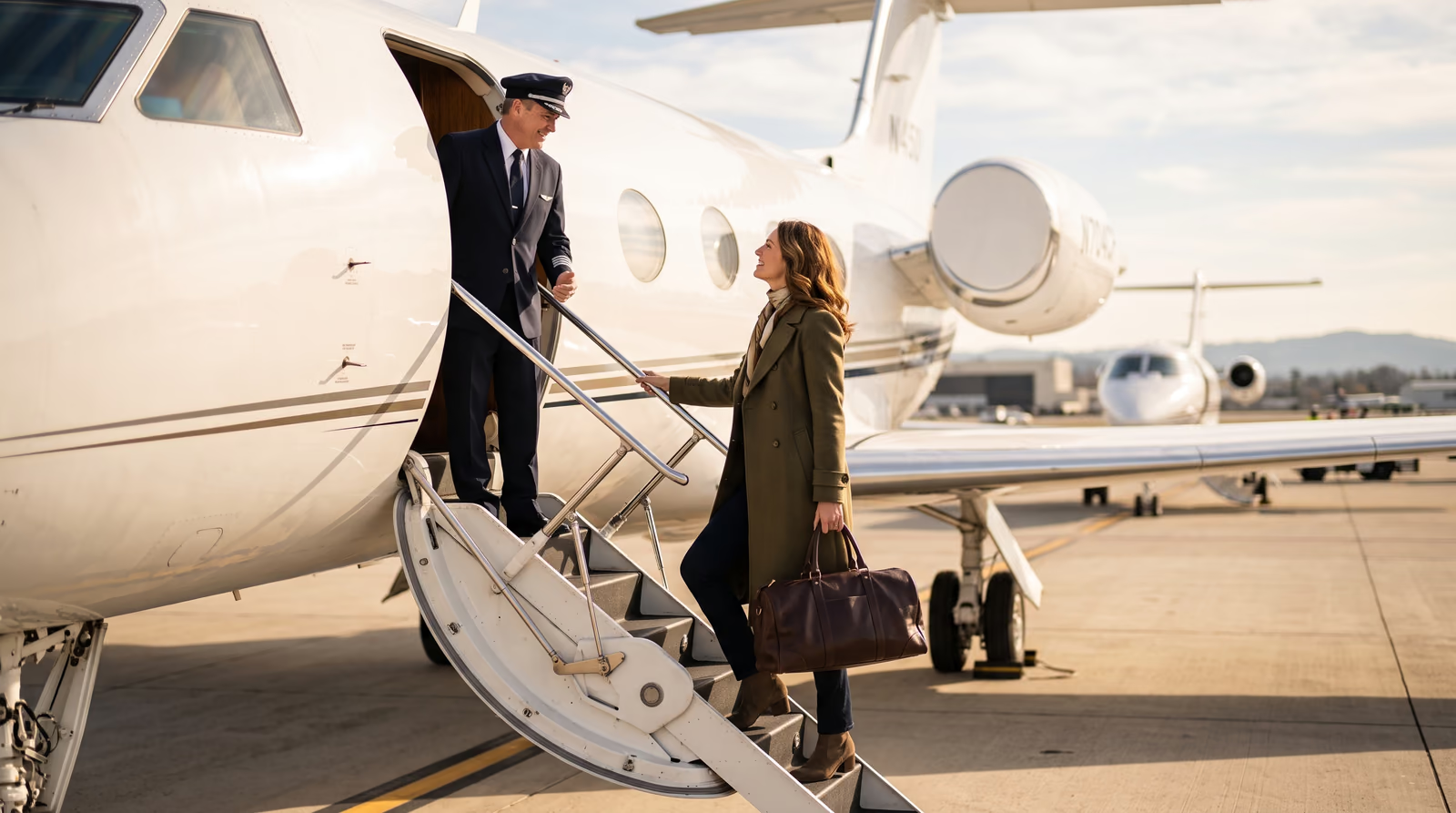
Chartering a private jet typically costs between $2,000 and $20,000 per flight hour as of 2026, depending chiefly on the size and range of the aircraft. In whole-trip terms, that spans roughly $6,000 for a one-hour turboprop hop and more than $150,000 for an intercontinental flight on an ultra-long-range flagship.
The spread is wide because charter is priced trip by trip. The hourly rate is only the anchor; positioning flights, airport charges, seasonal demand, crew logistics and taxes decide the final invoice. The benchmarks below draw on rates published by operators and brokers including Paramount Business Jets, Stratos Jet Charters, Air Charter Service and PrivateFly, and they describe typical market pricing rather than guaranteed quotes.
Hourly Rates by Aircraft Class in 2026
Hourly rates remain the industry's common currency, and in 2026 they cluster into predictable bands by cabin category.
| Aircraft class | Hourly rate (USD) | Seats | Representative aircraft |
|---|---|---|---|
| Turboprop | $2,000 to $3,500 | 6 to 8 | King Air 350, Pilatus PC-12 |
| Light jet | $2,500 to $5,500 | 6 to 8 | Phenom 300, Citation CJ3+ |
| Midsize jet | $4,000 to $8,000 | 7 to 9 | Citation XLS+, Learjet 60XR |
| Super-midsize jet | $5,000 to $10,500 | 8 to 10 | Challenger 350, Gulfstream G280 |
| Heavy and ultra-long-range | $8,500 to $20,000+ | 10 to 16 | Gulfstream G650, Global 7500, Falcon 7X |
Paramount Business Jets, one of the few US brokers that publishes a full rate card, lists turboprops from about $2,000 per hour, midsize jets from roughly $4,300 and large-cabin aircraft from $8,500 per hour and up. Stratos Jet Charters places a King Air 200 near $2,500 per hour and a Dassault Falcon 7X closer to $15,000, with the newest ultra-long-range flagships exceeding $20,000 on some missions.
Two structural rules inflate short trips. Most operators bill a daily minimum, typically two flight hours for light and midsize jets and up to three for large cabins, so a 40-minute flight is often charged as two hours. Many also apply a short-leg fee to segments under an hour to recover the engine-cycle costs that brief hops impose.
What Popular Routes Cost All In
Hourly rates only become meaningful when applied to real city pairs. The ranges below reflect one-way, all-in estimates published by brokers as of 2026.
| Route | Flight time | Aircraft | One-way range (USD) |
|---|---|---|---|
| New York to Miami | 2h 45m | Light to midsize | $12,000 to $34,000 |
| Los Angeles to Las Vegas | 1h 10m | Turboprop to light | $4,000 to $9,000 |
| London to Nice | 2h 00m | Light to midsize | $9,000 to $22,000 |
| Dubai to Riyadh | 1h 45m | Midsize to heavy | $14,000 to $32,000 |
| London to Dubai | 7h 00m | Super-midsize to ultra-long-range | $58,000 to $150,000+ |
On the East Coast staple, 2026 broker estimates put New York to Miami at $12,000 to $24,000 one way on a light jet, with midsize quotes stretching into the low $30,000s on peak dates. Los Angeles to Las Vegas is among the cheapest private routes flown anywhere, typically $4,000 to $6,000 on a turboprop and $6,500 to $9,000 on a light jet, though prices spike around major events on the Vegas calendar.
In Europe, PrivateFly lists London to Nice from around 8,000 euros on a six-seat light jet and about 12,500 pounds on a midsize Citation XLS, with larger cabins reaching the low $20,000s. In the Gulf, Paramount Business Jets quotes Dubai to Riyadh from around $19,000 on a midsize Hawker; smaller aircraft start near $14,000, while a heavy jet held overnight for a return typically prices in the low $30,000s. London to Dubai, a roughly seven-hour sector, starts near $58,000 on a super-midsize jet, runs past 60,000 pounds on a Challenger 605 and approaches 125,000 pounds, roughly $155,000, on a flagship Gulfstream G650.
Why Two Quotes for the Same Trip Can Differ by Thousands
Positioning is the first variable. Charter aircraft rarely live at the departure airport, and the empty flight to reach a client is paid for one way or another, either as an explicit ferry charge that commonly runs $2,000 to $8,000 or folded into the quoted rate. Trips that start where an operator bases its fleet almost always price better.
Demand calendars matter just as much. Operators and jet card programs designate peak days around holidays and marquee events, when surcharges apply, discounts vanish and lead times stretch. Private Jet Card Comparisons counted an average of more than 36 designated peak days per program entering 2026, a figure that has risen year over year, and some US brokers advised clients to expect summer 2026 quotes 15 to 20 percent above baseline in busy markets such as New York, Miami and Los Angeles.
Fuel completes the picture. Many operators attach a fuel surcharge that floats with jet fuel prices, which is why an identical itinerary can reprice between the first quote and the signed contract. Round trips flown on the same aircraft often beat two one-way bookings, provided the overnight costs stay reasonable.
The Fees That Surface on the Final Invoice
A credible quote should itemize the extras, because they are rarely trivial. Landing fees typically run $150 to $500 per airport, and handling by the fixed-base operator adds $200 to $800 more, with premium slots at congested fields costing above that. International trips layer on customs charges, overflight permits and ground handling that vary widely by country.
Winter operations carry the least predictable line item: de-icing. Billed after the flight based on the fluid actually sprayed, a single application can cost $1,000 to $10,000 or more, and it is not optional. Multi-day itineraries add crew overnight expenses, typically $200 to $600 per crew member per night under published broker guidance, covering hotels and per diems.
Taxes close out the invoice. US domestic charters carry a 7.5 percent federal excise tax plus per-passenger segment fees, while some European domestic itineraries attract VAT. As a planning rule, budgeting roughly 1.4 to 1.6 times the headline hourly cost gives a realistic picture of the all-in price on most domestic itineraries.
What It Costs to Charter a Private Jet in 2026
The hourly rate is only the anchor. Airport charges, positioning, crew and tax decide the final invoice.
Hourly rates by aircraft class
Each bar spans the typical rate range for the class, plotted on a shared scale.
The costs that surface on the final invoice
These sit outside the hourly rate and are the usual reason two quotes for the same trip differ.
Positioning or ferry flight
$2,000 to $8,000
Per trip, when the aircraft is not already where you are
Landing fees
$150 to $500
Per airport
FBO handling
$200 to $800
Per airport, higher at premium terminals
De-icing
$1,000 to $10,000+
Per application, billed on the fluid actually used
Crew overnights
$200 to $600
Per crew member, per night
US federal excise tax
7.5%
On domestic US charter flights
Rule of thumb
Budget 1.4x to 1.6x the headline hourly rate for a realistic all-in cost.
Empty Legs, Jet Cards and Other Ways to Pay Less
Empty legs remain the deepest discount in private aviation. When an aircraft must reposition without passengers, operators sell the sector at steep reductions, and both Air Charter Service and Stratos Jet Charters advertise savings of up to 75 percent off standard charter pricing. The trade-off is control: the schedule belongs to the originating client, the flight can move or cancel if that itinerary changes, and the deals are one-way by definition. Empty legs suit flexible travelers, not board meetings.
Jet cards trade a prepaid commitment, usually starting at 25 hours, for fixed or capped hourly rates and guaranteed availability on defined callout notice. As of mid-2026, the average jet card rate excluding turboprops stood at $11,688 per flight hour according to Private Jet Card Comparisons, with light jet cards typically in the $5,000 to $7,500 band. Cards make the most sense for flyers logging roughly 25 to 100 hours a year who value budgeting certainty over trip-by-trip shopping.
Beyond that threshold, the economics shift toward fractional ownership, where a share purchase buys guaranteed access at lower marginal hourly costs, offset by capital commitment and management fees that can exceed $15,000 a month. NBAA rules of thumb suggest ownership models generally need about 50 flight hours a year before the overhead starts to justify itself, and most advisers place the fractional sweet spot above 100 hours. Demand for shares has been climbing as delivery backlogs push buyers away from whole aircraft, a shift examined in AVNET's review of fractional private jet ownership trends.
Is Chartering Worth the Premium?
For anyone flying fewer than about 25 hours a year, on-demand charter remains the rational entry point to private aviation: no capital outlay, no monthly management fees and no commitment beyond the trip at hand. The premium over first class buys the things airlines cannot sell at any price, namely departure on the passenger's schedule, access to thousands of airports the airlines skip, ramp-side arrival minutes before wheels up, and total privacy for the people and conversations on board.
The disciplined approach is to treat the ranges above as benchmarks, request fully itemized quotes from at least two sources, and ask specifically about positioning, peak-day surcharges and taxes before signing. Priced that way, a charter invoice as of 2026 holds few surprises, and the decision becomes what it should be: a clear-eyed trade of money for time, reach and discretion.