Once the new rules apply, no one will be able to charter out a recreational boat in Saudi Arabia's Red Sea waters without two licences: one for the company that runs it and one for the boat itself, each valid for 12 months. The Saudi Red Sea Authority (SRSA) has published the Kingdom's first Requirements and Conditions for Recreational Boat Chartering, reported by Okaz on 16 October and by GCC Business News and Marine Industry News in the days that followed. The rules take effect 180 days after publication.
For a Gulf owner hoping to earn charter income off the Saudi coast, and for a client booking a boat near the new Red Sea resorts, the rules change who can sell a trip, what the boat must pass and what the guest is told before paying.
Two licences, both renewed every year
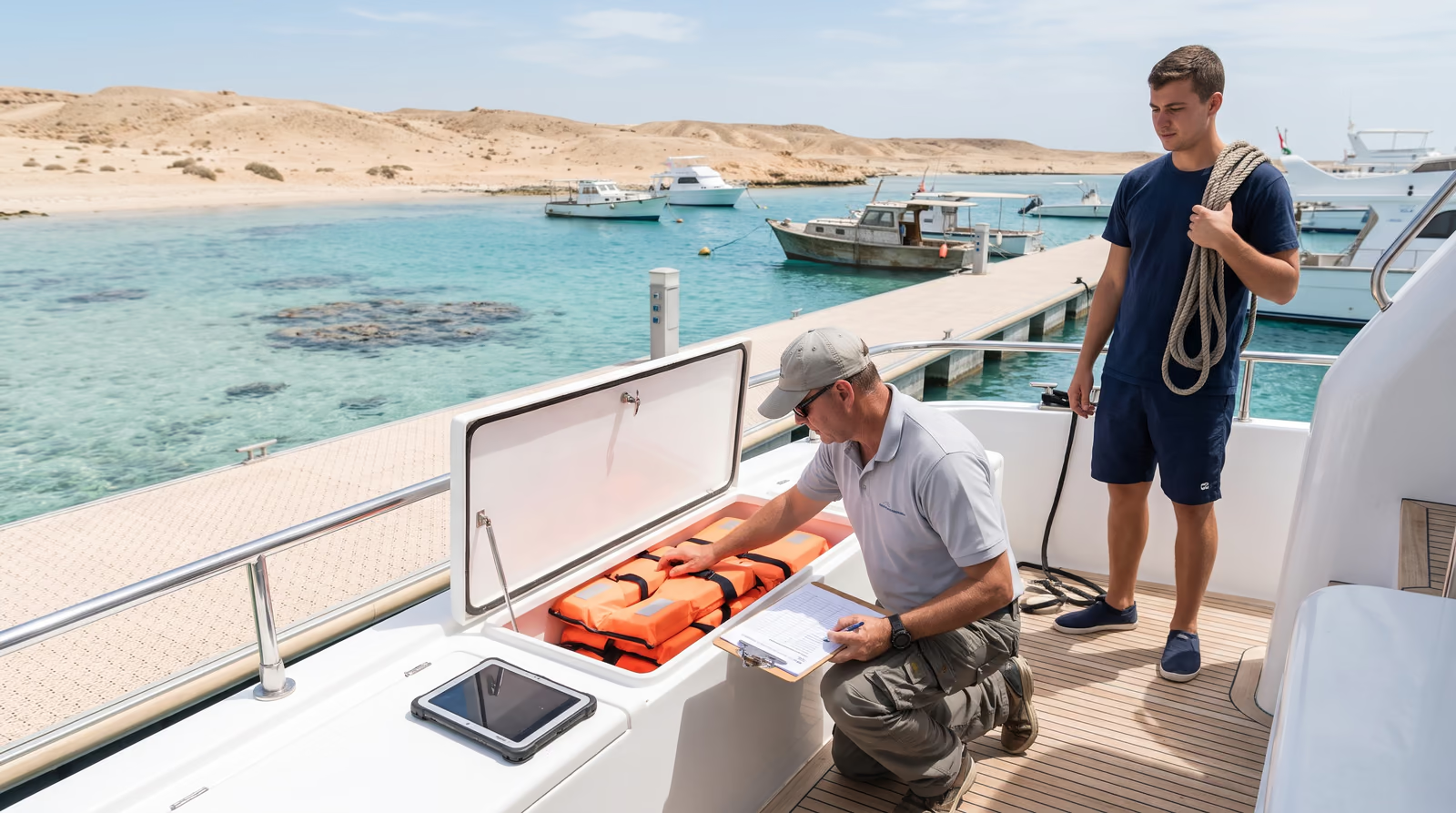
The structure is the same in every report of the rules. The company or establishment that manages and operates the boats needs a Marine Activities Operator Licence. Each boat then needs its own Tourism Charter Licence, which is issued only after an on-site technical inspection carried out by an accredited inspection company, and only once the boat meets every other requirement.
Both licences run for 12 months from issue. Renewal is not automatic: the authority reviews the operator's compliance record and the quality of its service before extending it. Okaz adds that renewal requests can be filed 30 to 60 days before expiry, and that the SRSA can suspend or revoke a licence for violations, for unauthorised activity, or where an operator puts safety or the marine environment at risk.
What it means for a private owner
The clause that matters most to an individual owner comes from the Okaz report. A person who wants to charter out a privately owned boat must do so under a contract with a marine tourism operator that the authority has licensed. The trips must leave from licensed tourist marinas and carry the required sailing permits.
In practice, that removes the informal route of an owner renting a boat directly to friends of friends or through a listing app. The owner becomes a supplier to a licensed operator, which carries the licence, the insurance and the paperwork. Bookings and contracts, again according to Okaz, must go through the authority's approved electronic platform or an accredited digital intermediary.
Owners already holding a licence or permit get a longer runway. Okaz reports that establishments and boat owners with valid papers issued before the rules take effect will have up to 365 days from publication to bring their position into line.
Charter income rarely covers the cost of keeping a boat in any case. Of the four charter yachts with published accounts, three lose money, as AVNET's look at what a superyacht costs to own for a year showed. A licensed operator's commission and an annual inspection now sit on top of that arithmetic in Saudi waters.
What it means for a guest
The rules are written as much for the client as for the operator. Before booking, a guest must be able to see the trip's duration, route, departure and return points and planned activities. Prices, cancellation terms and refund policies must be disclosed in advance, and operators may not charge any fee or commission that was not disclosed.
On board, operators must give a safety briefing before each trip and keep a written emergency plan, in Arabic and English, covering fire, collision and other marine incidents. They must weigh sea and weather conditions, speed and passenger numbers, and not sail when conditions are unsuitable. Insurance must cover both visitors and the marine environment. Operators must also say whether a boat suits guests with disabilities, offer communication in languages other than Arabic where the trip needs it, and run a clear complaints process.
The reef rules
The environmental conditions are short and firm. Operators may work only in marine destinations and areas the SRSA has approved. Okaz reports that anchoring outside designated areas is banned, as is using marinas built on coral reefs or marine habitats. Operators must protect reefs and biodiversity and brief guests on responsible behaviour.
Where superyachts fit
The new conditions are framed around recreational boats. Large foreign yachts already have their own regime. Under the SRSA's Large Yacht Chartering Regulation, published in the official gazette Umm Al-Qura in August 2023, a foreign-flagged yacht of 24 metres or more needs a cruising permit and then a charter permit before it can take paying guests. The permit is applied for through the authority's Ebhar platform by a licensed maritime tourism agent, with the charter contract, classification and technical certificates and a crew list attached, and runs for up to six months.
None of the reports of the new rules say how they interact with that regime. A captain of a foreign-flagged superyacht planning a Saudi season should treat the 2023 regulation as the governing text and ask the agent whether the new boat licences also apply.
A small licensed market, for now
The rules arrive in a market that is still small. The SRSA had issued eight yacht charter licences across the Kingdom by the end of the first quarter of 2026, and nine by the second quarter, according to the authority's announcements as reported by Cyprus Shipping News and Arab News.
The start date depends on the official publication date, which the reports do not give. If the 180 day clock started with the announcement in mid-October, the rules apply from around mid-April 2027, and the window for existing licence holders closes around mid-October 2027. The binding date will be the one the SRSA sets in its own text.
For owners who keep a yacht in the UAE, the comparison is worth making before a season is planned. The UAE's offer is residency for yacht owners, set out in AVNET's guide to the superyacht golden visa. Saudi Arabia's offer is new water and new resorts, reached through a licensed operator.